

A coffee roaster needs a pouch that protects aroma and stands neatly on the shelf. A prepared-meal producer needs a retort bag that holds up through processing. A skincare brand may need a printed refill pouch, a bottle, and a carton that look like they belong to the same product line. Each brief starts with a different need, but all three benefit from working with a packaging partner that can connect material selection, structural design, printing, and production.
HongBang Packaging is a China-based custom flexible packaging manufacturer that also provides one-stop packaging services for bags, boxes, bottles, and jars. Established in 1999 and based in Huizhou, Guangdong, we help brands, importers, and contract packers develop packaging for food, beverages, personal care, household products, and selected medical applications. Our work ranges from everyday resealable zipper bags, kraft paper bags, and stand-up pouches to technically demanding flexible packaging for specific processing and storage conditions.
What Does One-Stop Packaging Service Include?
A product launch often involves more than one packaging format. A supplement brand may use a printed pouch for trial sizes, a jar for its retail pack, and a carton for a promotional bundle. A personal care brand may need a bottle for its main product and a spouted refill pouch for repeat purchases. Coordinating these formats from the beginning helps keep colors, graphics, and pack dimensions consistent.
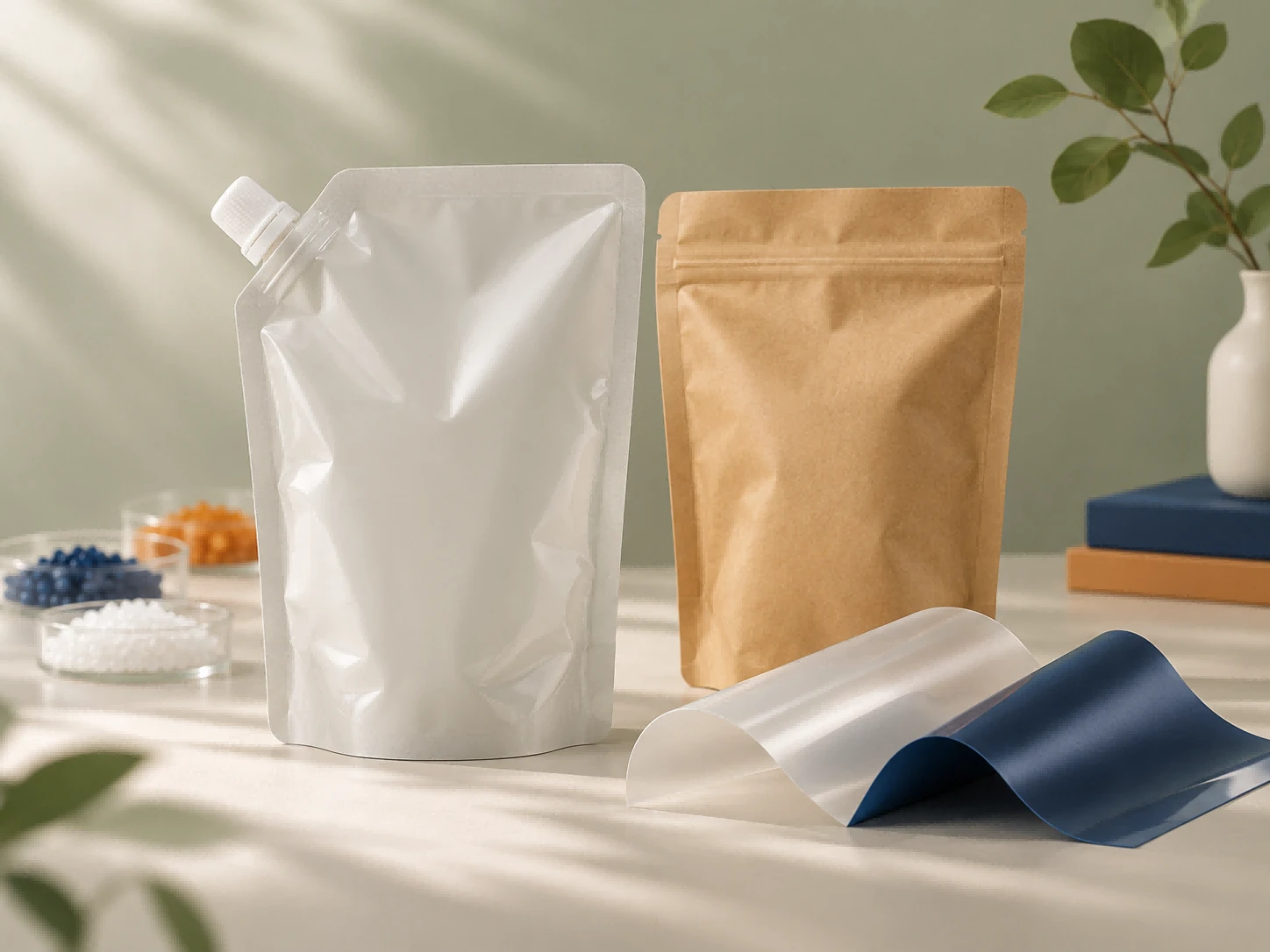
HongBang can support the project from the initial brief through material and format selection, artwork review, sampling, and bulk production coordination. Flexible packaging options include stand-up pouches, flat-bottom bags, zipper bags, three-side seal pouches, spouted pouches, and printed roll film for automatic packing. Boxes, bottles, and jars can be specified alongside the flexible pack so the complete range is planned together.
How Does R&D Improve an Everyday Packaging Bag?
A familiar bag shape can still require careful engineering. A zipper that works well for dried fruit may need a different design for fine powder. A stand-up pouch sized for lightweight snacks may need a wider base to sit securely when filled with a denser product. Even the tear notch should be positioned with the product and opening method in mind.
We develop zipper bags, kraft paper pouches, and stand-up pouches around details that affect daily use. These include how easily the bag opens, how it feels in the hand, how it stands when filled, and how it runs on the customer's packing equipment. For a kraft paper pouch, for example, the paper can provide the desired look and feel, while the inner structure is selected for the required sealing and barrier performance. Getting those details right early gives customers a sample they can evaluate under realistic filling and handling conditions.
Which High-Performance Packaging Bags Can HongBang Develop?
| Packaging requirement | What we consider during development |
|---|---|
| High barrier and tight seals | Oxygen and moisture barrier targets, seal strength, and leak testing for products such as coffee, powders, and snacks. |
| Light and UV protection | Opaque films, foil-based laminates, or UV-blocking structures selected according to how much of the product needs to remain visible. |
| Anti-fog visibility | Clear films with anti-fog properties for applications such as chilled produce, where condensation can obscure the contents. |
| High-temperature and retort performance | Film and seal structures selected around the customer's processing temperature, cycle duration, and post-process handling. |
| Food-contact and medical packaging | Application-specific material selection, documentation, and testing based on the intended use and target market. |
These requirements often overlap. A chilled produce pack may need a clear anti-fog panel so shoppers can see the product.
A light-sensitive powder may need an opaque high-barrier pouch with a reliable seal.
A ready meal may call for a retort structure that maintains seal integrity during processing and distribution. Defining the priority upfront helps us recommend a structure that fits the application and gives the customer clear criteria for approving the sample.
How Do We Approach Recyclable and Biodegradable Packaging?
For customers exploring recyclable flexible packaging, we can evaluate mono-material options such as Mono-PE and Mono-PP. The review covers the entire pack, including the film, barrier layers, printing, zipper, and spout where applicable.
For example, a dry snack pouch and a liquid refill pouch can both be candidates for mono-material development, but the refill pouch also needs a compatible fitment and seals that can withstand handling.
We also discuss biodegradable material options for suitable applications. The choice depends on the product's shelf-life needs, the material's documented properties, and the disposal conditions in the destination market. A kraft paper exterior can give a pouch a natural finish. Any recycling, biodegradability, or compostability claim should reflect the finished packaging structure and the evidence available for that specific pack.

What Matters for Retort, Food-Contact, and Medical Packaging?
For a retort pouch, we start with the customer's actual processing conditions. We review the product, fill weight, pouch dimensions, and intended temperature and cycle duration. A project designed around a 121°C process may require a different evaluation from one planned for 135°C. The filled pouch should be tested under the intended cycle before the structure is approved for bulk production.
For food-contact packaging, we consider the type of food, whether it is dry, oily, or wet, and how it will be filled, stored, or heated. Those details guide material selection and the documentation required for the destination market.
For medical packaging, the brief may also specify a sterilization method, seal requirements, or controlled opening.
We review those specifications early so the customer can determine what qualification and validation the finished pack requires.
How Do We Move From a Sample to Bulk Production?
Sampling gives both teams a chance to test the packaging in use. Can the customer's team fill and seal it consistently? Does the zipper feel right after repeated opening? Does the bag fit neatly into its carton? Can the print stay legible at the actual pack size? A physical sample often answers questions that are hard to resolve from a drawing alone.
Our manufacturing capabilities cover printing, lamination, slitting, bag making, and quality testing. Once a sample is approved, the agreed material structure, dimensions, artwork, and performance requirements become the reference for production. Depending on the application, checks may include seal strength, leakage, barrier properties, or drop performance for liquid pouches. This helps customers specify what they expect from the finished pack before committing to a bulk order.