

In today's competitive global market, choosing the right packaging supplier is no longer a simple purchasing decision-it is a strategic move that directly affects product quality, brand image, logistics efficiency, and long-term profitability. Whether you are sourcing Mylar bags, Stand Up Pouch, Flat Bottom Bag, coffee bag, Liquid Bag, or Packaging Roll Film, the right manufacturer can significantly enhance your business performance.
This guide answers the most common questions buyers ask when sourcing packaging suppliers, especially for international trade and large-scale procurement.
How To Choose A Packaging Supplier?
Selecting a packaging supplier requires a structured evaluation approach rather than focusing only on price. Professional buyers typically assess suppliers based on five core dimensions:
1. Manufacturing Capability
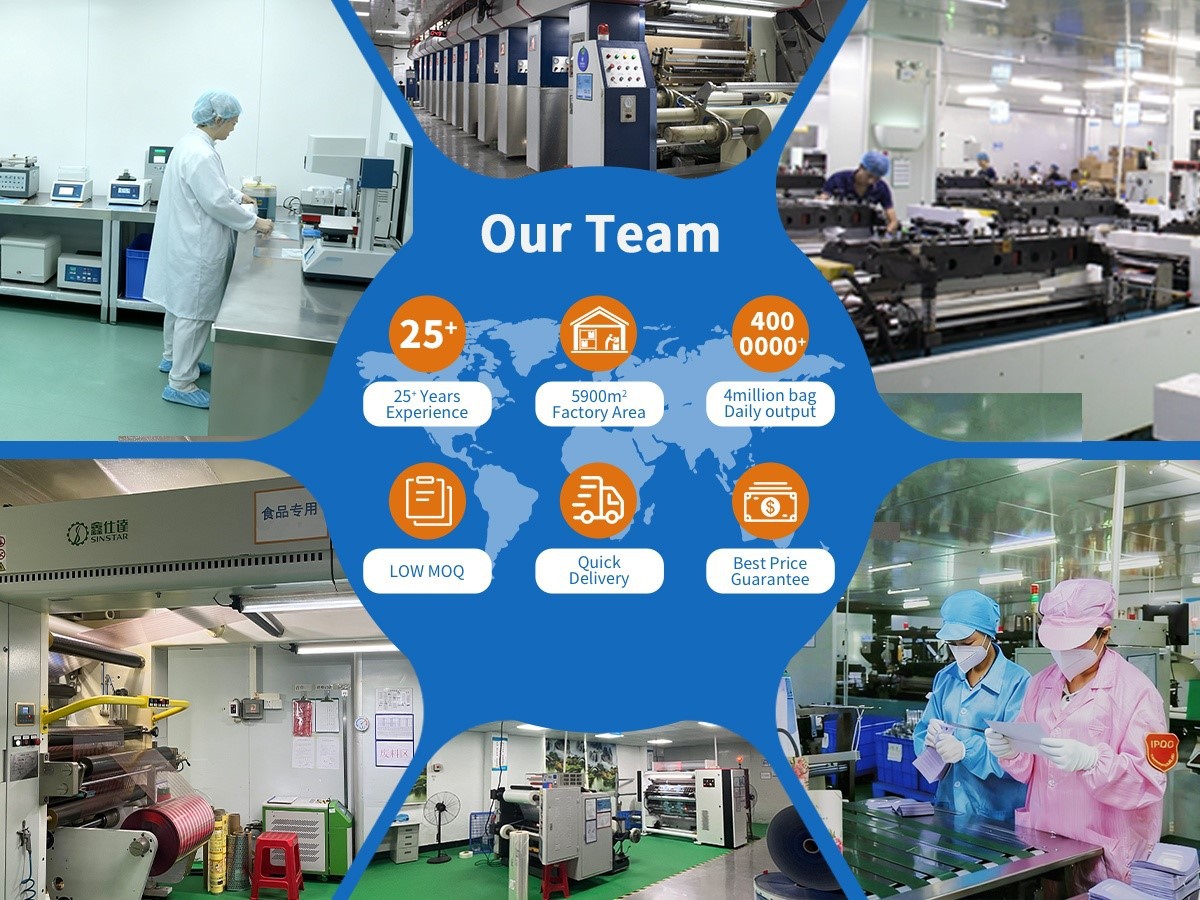
A reliable supplier should have advanced equipment for printing, lamination, slitting, and bag-making. Integrated production ensures better quality control and faster lead times.
2. Industry Experience
Suppliers with 10–20+ years of experience understand material structures, barrier performance, and application-specific requirements such as coffee packaging, food safety, or liquid packaging.
3. Customization Ability
Top manufacturers offer full OEM/ODM services, including:
Custom sizes and bag structures
Valve and zipper integration
Surface finishes such as matte, glossy, or spot UV
4. Export Experience
If you are importing, your supplier must understand international shipping, documentation, and compliance requirements.
5. Communication Efficiency
Fast and clear communication reduces errors and ensures smooth project execution.
What To Look For In A Packaging Manufacturer?
When evaluating a packaging manufacturer, experienced buyers go deeper into technical and operational capabilities.
Material & Barrier Expertise
A qualified supplier should offer multi-layer structures such as:
⭐PET/AL/PE (high barrier for coffee bags)
⭐NY/PE (high puncture resistance)
⭐Kraft + foil (premium and eco-friendly appearance)
⭐Barrier performance is critical for protecting products from oxygen, moisture, and UV light.
Printing Technology
Look for:
⭐Gravure printing (high volume, consistent quality)
⭐Digital printing (low MOQ, fast turnaround)
⭐High-end printing ensures strong brand presentation in retail markets.
Production Capacity
⭐Large-scale manufacturers should support:
⭐Mass production with stable quality
⭐Monthly output in millions of bags
⭐Multiple production lines for flexibility
R&D And Innovation
⭐Leading factories invest in:
⭐Recyclable packaging
⭐Biodegradable materials
⭐High-temperature retort pouches
⭐Anti-fog and anti-UV solutions
How To Reduce Packaging Cost?
Cost control is one of the most critical concerns for B2B buyers. However, reducing packaging cost does not mean choosing the cheapest supplier.
1. Optimize Material Structure
Avoid over-specification. For example, not all products require aluminum foil layers-alternative high-barrier films may reduce cost.
2. Increase Order Quantity
Bulk production significantly lowers unit cost due to economies of scale.
3. Use Packaging Roll Film
For automated production lines, Packaging Roll Film reduces labor and improves efficiency compared to pre-made bags.
4. Standardize Sizes
Custom sizes increase tooling and setup costs. Standard dimensions reduce production complexity.
5. Choose the Right Printing Method
Digital printing for small batches
Gravure printing for large-scale orders
What Is Lead Time For Packaging Production?
Lead time varies depending on order complexity, printing method, and production volume.
Typical timelines in the flexible packaging industry:
⭐Digital printing orders: 7–15 days
⭐Gravure printing orders: 15–30 days
⭐Large bulk production: 20–40 days
Lead time includes:
⭐Design confirmation
⭐Cylinder (plate) making (for gravure)
⭐Printing and lamination
⭐Curing process (typically 24–72 hours)
⭐Slitting or bag-making
⭐Final quality inspection
Reliable manufacturers provide clear production schedules and delivery commitments.
How To Import Packaging From China?
China is one of the largest flexible packaging manufacturing hubs in the world, offering competitive pricing and strong production capabilities.
Step 1: Supplier Verification
Check:
⭐Company background
⭐Factory audit reports
⭐Customer references
Step 2: Request Samples
Always test samples before placing bulk orders to verify quality and compatibility.
Step 3: Confirm Specifications
Define clearly:
⭐Material structure
⭐Bag type (Stand Up Pouch, Flat Bottom Bag, coffee bag, etc.)
⭐Thickness and size
⭐Printing design
Step 4: Negotiate Terms
Common trade terms:
⭐FOB (Free On Board)
⭐CIF (Cost, Insurance, Freight)
Step 5: Logistics & Customs
Work with experienced freight forwarders to handle shipping, customs clearance, and documentation.
What Certifications Should A Packaging Supplier Have?

Certifications are essential for ensuring product safety, compliance, and credibility in international markets.
Key certifications include:
⭐ISO 22000 – Food safety management
⭐BRC (British Retail Consortium) – Global food packaging standard
⭐FDA compliance – Required for U.S. food contact materials
⭐BSCI – Social responsibility and ethical manufacturing
⭐ISO 9001 / ISO 14001 – Quality and environmental management
Certified suppliers demonstrate commitment to quality control and regulatory compliance.
How To Evaluate Packaging Quality Before Ordering?
Before placing large orders, professional buyers conduct a detailed quality evaluation.
Before placing a bulk packaging order, systematic quality evaluation is essential to avoid defects and losses. First, check material properties, including thickness, toughness, waterproof and barrier performance, to match product storage needs.
Second, verify workmanship: inspect sealing firmness, neat cutting and fine printing without blurring or color deviation. Third, ask for certification like FDA, SGS or ISO reports to ensure safety and compliance.
Finally, test sample durability under extrusion and temperature changes. Reasonable pre-order inspection guarantees stable packaging quality and brand reputation.
1. Appearance Inspection
Check:
Printing clarity and color consistency
Alignment accuracy
Surface defects
2. Material Testing
Evaluate:
⭐Thickness tolerance
⭐Barrier performance
⭐Flexibility and durability
3. Functional Testing
For specific products:
⭐Seal strength test
⭐Drop test (for liquid bags)
⭐Zipper performance test
⭐Valve functionality (for coffee bags)
4. Laboratory Testing
Advanced manufacturers conduct:
⭐Residual solvent testing
⭐Coefficient of friction testing
⭐Tensile strength testing
5. Trial Production
Request a pilot run before mass production to ensure consistency.
Final Thoughts: Building A Long-Term Packaging Partnership
Choosing a packaging supplier is not a one-time transaction-it is the foundation of a long-term partnership. The right manufacturer will help you:
⭐Improve product shelf life
⭐Enhance brand competitiveness
⭐Reduce overall supply chain cost
⭐Ensure stable and scalable production
For businesses sourcing Mylar bags, Stand Up Pouch, Flat Bottom Bag, coffee bag, Liquid Bag, and Packaging Roll Film, working with an experienced and certified factory is essential for long-term success.