

Even small packaging defects can create problems during transportation, storage, sterilization, or production.
For this reason, companies increasingly seek experienced custom flexible packaging manufacturers capable of developing technically demanding packaging solutions.
HongBang Packaging, established in China in 1999, specializes in custom printed flexible packaging, material development, and OEM/ODM manufacturing.
Our packaging capabilities cover medical-grade packaging projects, aluminum foil bags, anti-static shielding bags, vacuum bags, high-barrier pouches, heat-resistant packaging, and other specialized flexible packaging applications.
We work with international customers to develop packaging structures that meet specific functional requirements rather than relying on generic packaging designs.
Q1: Why Do Medical and Electronics Packaging Require Specialized Materials?
Medical devices and electronic components can be sensitive to environmental conditions.
Medical packaging may need to maintain a validated sterile barrier, protect the contents against physical damage, and remain compatible with the intended sterilization process.
Electronics packaging may need to reduce electrostatic discharge risks, control moisture exposure, and prevent damage to delicate components.
For both industries, the reliability of the packaging depends on correct material selection and manufacturing controls.
Important considerations include:
Material compatibility with the packaged product
Consistent heat-sealing performance
Puncture and mechanical resistance
Moisture and oxygen barrier properties
Electrostatic shielding where required
Traceability and quality documentation
Compatibility with the intended storage or processing conditions
HongBang Packaging evaluates these requirements when developing customized technical packaging.
Q2: What Types of Medical Flexible Packaging Can Be Customized?
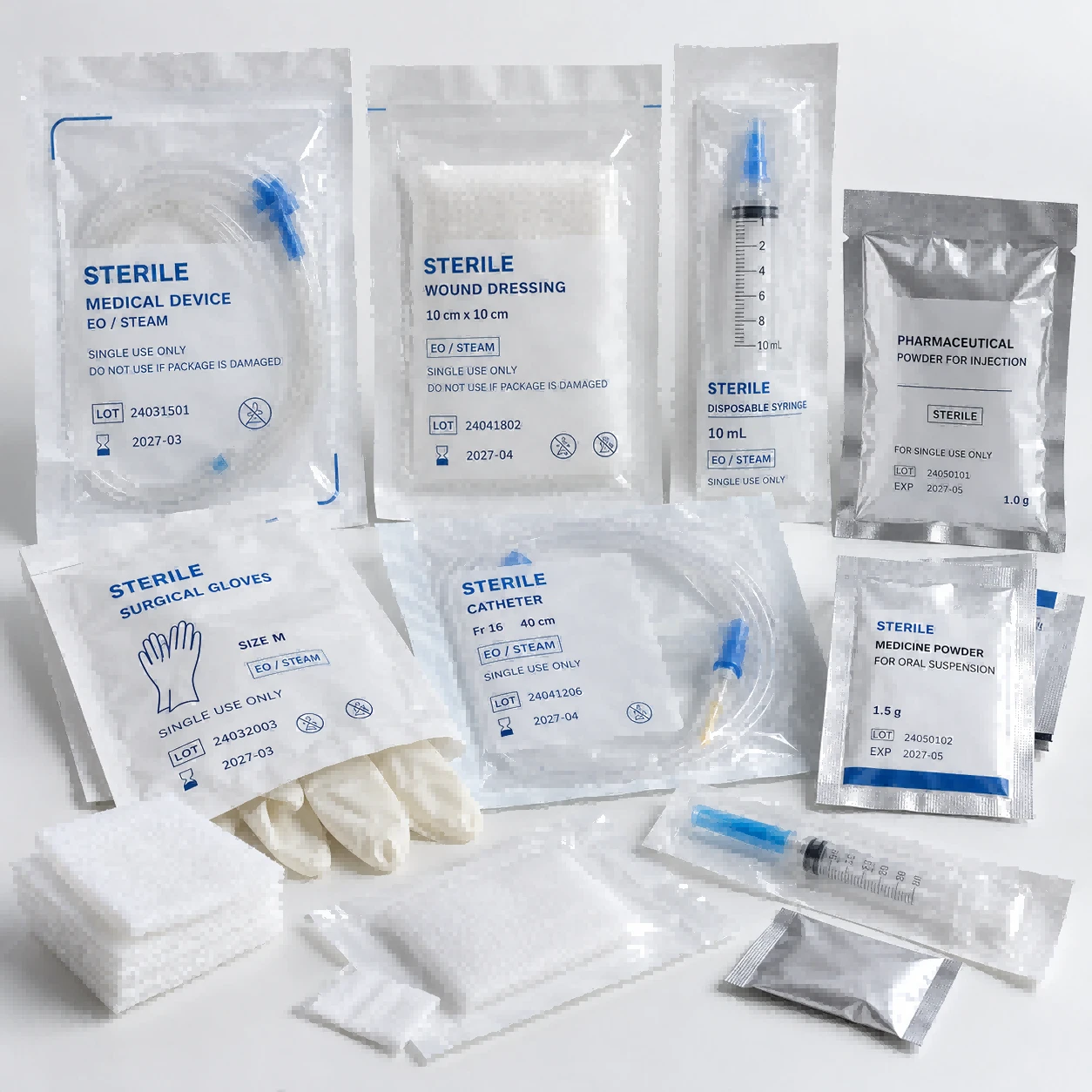
Medical packaging encompasses several specialized formats.
Medical Sterilization Pouches
Selected pouch structures are designed for medical devices requiring a specified sterilization process.
The material system must be suitable for the process and maintain the required sterile barrier after sterilization and during the validated shelf life.
Medical Device Packaging Bags
These packages are developed for devices, instruments, accessories, dressings, or disposable medical products.
Specifications depend on device geometry, packaging process, sterilization method, and protection requirements.
Medical Paper-Film Pouches
Suitable medical-grade paper and film combinations may be used for applications requiring controlled permeability and sterilization compatibility.
The material structure must be selected and validated for the intended sterilization modality.
Pharmaceutical Aluminum Foil Laminates
High-barrier foil laminates may be considered for pharmaceutical-related packaging applications requiring strong moisture, gas, or light protection.
Regulatory and performance requirements vary significantly by pharmaceutical product and packaging format.
HongBang Packaging provides custom material and production solutions based on the customer's technical specifications.
Q3: What Makes a Reliable Medical Packaging Manufacturer?
Medical packaging requires disciplined quality management and documented manufacturing procedures.
A suitable packaging manufacturer should understand material traceability, process control, sealing performance, and the importance of product-specific validation.
HongBang Packaging has experience with quality management requirements associated with ISO 13485 and other manufacturing quality systems.
For individual medical packaging projects, customers should confirm the applicable certification scope, process controls, and product documentation.
What Tests May Be Required for Medical Packaging?
Depending on the packaging system and intended use, evaluations may include:
Seal Strength Testing: Measures the mechanical performance of sealed areas.
Package Integrity Testing: Evaluates whether the package maintains the required protective closure.
Burst or Pressure Testing: Helps assess package resistance under specified conditions.
Microbial Barrier Evaluation: May be required for sterile barrier packaging materials and systems.
Material Compatibility Testing: Verifies suitability for the intended application and processing conditions.
Relevant ISO, ASTM, and other recognized test methods may apply depending on the medical packaging system.
Q4: Why Is Aluminum Foil Packaging Used for Electronic Components?
Aluminum foil flexible packaging can provide strong moisture, gas, and light barrier performance when incorporated into a properly designed laminate.
This makes it useful for moisture-sensitive electronic materials and other products requiring environmental protection.
Potential applications include semiconductors, electronic assemblies, printed circuit boards, industrial components, and sensitive electronic accessories.
Foil laminate structures may also be used in vacuum or moisture-barrier packaging applications.
Can Aluminum Foil Bags Protect Electronics from Static Electricity?
Not all aluminum foil packaging is automatically qualified as electrostatic discharge protective packaging.
Electrostatic protection depends on the complete structure, surface electrical properties, and relevant testing.
When ESD shielding is required, materials should be selected and evaluated against appropriate electrical performance specifications.
HongBang Packaging can develop aluminum foil and specialized electronics packaging according to customer requirements, with the necessary protection characteristics confirmed through appropriate testing.
Q5: What Are Anti-Static and ESD Shielding Bags?
Anti-static and electrostatic discharge shielding bags are designed for applications where electrostatic charging or discharge could damage sensitive components.
However, these two terms do not describe identical performance.
Low-charging materials help reduce the generation of static electricity during normal handling.
ESD shielding materials are designed to reduce the energy transmitted to the contents during specified electrostatic discharge events.
A complete electronics packaging solution may require additional properties such as moisture protection, puncture resistance, or seal integrity.
Which Products Commonly Use ESD Packaging?
Applications include:
Semiconductor components and integrated circuits
Printed circuit boards and electronic assemblies
Memory modules and storage components
Capacitors, resistors, and connectors
LED strips and electronic lighting components
Precision electronic parts and accessories
HongBang Packaging supports the customization of electronics packaging in multiple sizes and pouch structures.
The appropriate electrical performance and packaging configuration should be specified for each project.
Q6: What Is the Difference Between ESD Bags and Moisture Barrier Bags?
This is an important distinction for electronics manufacturers.
An ESD shielding bag is primarily selected for electrostatic discharge protection.
A moisture barrier bag is designed to limit moisture transmission and protect contents that are sensitive to humidity.
Some specialized multilayer packaging structures may provide both functions, but the performance must be evaluated independently.
Why Does Moisture Matter for Semiconductors?
Certain moisture-sensitive semiconductor devices can absorb atmospheric moisture during storage and handling.
When exposed to high-temperature assembly processes, absorbed moisture can contribute to reliability problems.
Appropriate moisture barrier packaging may form part of a broader storage and handling system involving desiccants, humidity indicators, and controlled processing procedures.
Customers should determine the applicable moisture sensitivity classifications and industry handling requirements for their products.
HongBang Packaging can help develop customized high-barrier packaging structures based on the required moisture protection level.
Q7: How Can Vacuum Packaging Protect Industrial and Electronic Products?
Vacuum packaging removes a substantial portion of the air from a package before sealing.
It can be useful for selected industrial materials and products that benefit from reduced internal air volume.
For electronics applications, vacuum compatibility must be evaluated carefully because not every component can tolerate the mechanical pressure or handling conditions involved.
Important packaging properties include:
Seal Reliability
The package must maintain an effective seal under its intended handling conditions.
Puncture Resistance
Sharp edges, pins, and rigid components may damage insufficiently protected films.
Barrier Performance
Moisture-sensitive products may require laminates with appropriately low water vapor transmission rates.
Mechanical Stability
The film should withstand expected handling, storage, and transportation conditions.
Q8: How Are High-Performance Packaging Bags Developed?
Technically demanding packaging requires a systematic development process.
HongBang Packaging begins by reviewing the customer's product characteristics, protection requirements, packaging dimensions, and intended use.
Material selection is followed by structural development, printing specifications, sample preparation, and evaluation.
Our manufacturing process may include high-speed printing, lamination, controlled curing, slitting, bag making, and finished-product inspection.
For complex projects, the engineering review may address:
Light and UV Protection
Sensitive products may require selected opaque, metallized, or UV-protective structures.
High-Temperature Resistance
Packaging intended for sterilization or thermal processing requires validated heat-resistant materials and seals.
Low-Temperature Performance
Some industrial products require packaging capable of maintaining flexibility and strength under cold conditions.
High Seal Integrity
A reliable seal is essential when packaging is expected to provide a controlled protective barrier.
Chemical Resistance
Material compatibility must be confirmed when packaging comes into contact with demanding formulations or industrial substances.
These characteristics must be engineered according to the intended application rather than assumed from the appearance of the packaging.
Q9: Can Technical Packaging Also Be Custom Printed?
Yes. Functional packaging and custom printing can be combined when compatible materials and processes are selected.
For industrial and medical-related projects, printing may support identification, traceability, handling instructions, product information, and corporate branding.
HongBang Packaging offers custom printing capabilities for suitable packaging structures, including high-resolution gravure printing and selected digital printing applications.
Customers can specify packaging dimensions, material combinations, surface finishes, printing colors, and sealing designs.
For medical and highly regulated applications, artwork and print placement must also account for applicable labeling and production requirements.
Does Custom Printing Affect Packaging Performance?
Printing inks, adhesives, coatings, and manufacturing conditions can influence the overall packaging structure.
For this reason, packaging design should consider both functional requirements and printing specifications from the beginning.
We coordinate printing and material selection to support consistent finished-package quality.
Q10: Why Is Factory-Direct Manufacturing Important for Technical Packaging?
For products with demanding specifications, direct communication with the manufacturing team is particularly valuable.
Technical packaging may require multiple rounds of material selection, sample testing, specification adjustments, and production validation.
Working directly with a packaging manufacturer can help improve communication between procurement teams, engineers, designers, and production personnel.
HongBang Packaging operates integrated flexible packaging production capabilities, including printing, lamination, curing, slitting, and bag making.
Our manufacturing facilities cover approximately 35,000 square meters, supported by more than 200 employees and extensive production equipment.
With over 25 years of industry experience, we support overseas companies seeking customized packaging solutions from China.
Our services include technical consultation, OEM and ODM development, material selection, custom printing, sample coordination, manufacturing, quality inspection, and export support.
Q11: What Should International Buyers Ask Before Ordering Specialized Packaging?
Before placing an order, buyers should provide clear technical specifications.
Useful information includes product dimensions and weight, material compatibility requirements, sealing method, expected storage conditions, and transportation environment.
For medical packaging, the intended sterilization method and applicable validation requirements are particularly important.
For electronic packaging, the required ESD characteristics, moisture barrier level, and handling conditions should be clearly defined.
Customers should also confirm the applicable testing methods, documentation, sampling procedures, and acceptance criteria.
HongBang Packaging works with buyers in the United States, Canada, Europe, Australia, and other international markets to review project requirements and develop suitable production solutions.
Conclusion: Where Can You Find a Reliable Custom Technical Packaging Manufacturer?
Medical and electronic packaging require more than standard pouch production.
They demand appropriate material engineering, controlled manufacturing, dependable sealing, and a clear understanding of end-use requirements.
HongBang Packaging focuses on premium custom flexible packaging, including medical packaging projects, anti-static electronic bags, high-barrier aluminum foil pouches, vacuum packaging, and specialized functional laminates.
Our objective is to help global manufacturers protect sensitive products through customized packaging structures and consistent production processes.
Whether you need specialty packaging for electronic assemblies, moisture-sensitive components, medical devices, or demanding industrial applications, our team can discuss your technical specifications and manufacturing requirements.