


Easy-peel lidding film is designed to provide a controlled opening when it is heat-sealed to a compatible tray or cup. Choosing the right film starts with the actual sealing surface, food application, storage conditions, and machine settings. For ready meals, fresh produce, dairy cups, and chilled snacks, those details matter more than the word "peelable" on a quotation.
What makes a food tray lid easy to peel?
A good peel starts at the tab, continues smoothly across the flange, and finishes without the user having to stop and regrip the film. The target is a repeatable opening experience together with a seal that holds through the product's intended handling and storage.
The film's sealing layer and the tray surface work as a pair. Pressure, temperature, dwell time, flange shape, and the condition of the sealing surface affect how that pair behaves. Two films may both be marketed as easy-peel grades and give different results on the same tray. The same film can also open differently after refrigeration or freezing. A meaningful approval therefore uses the intended tray and samples conditioned for the actual application. Commercial lidding film specifications also distinguish seal behavior by tray substrate.
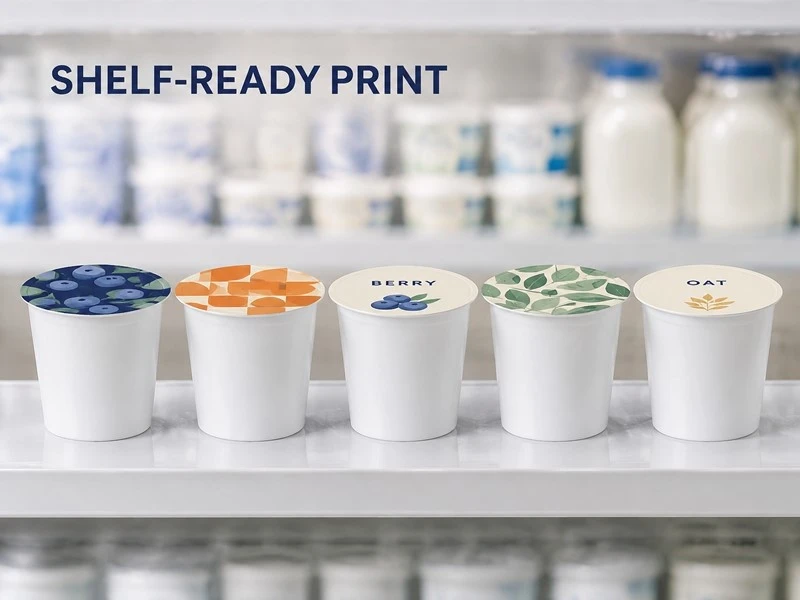
Which lidding film works with PP, PET, or coated paper trays?
Start by asking the tray supplier what material is exposed at the flange, the surface the film touches. A purchase order may describe a tray by its main material, while its sealing surface includes a coating or another polymer layer. Send the converter a physical tray sample and, if available, a drawing or material specification.
| Food tray or application | Start by confirming | Check during sampling |
|---|---|---|
| PP ready-meal tray | PP sealing surface, flange width, storage and intended reheating method | Peel at the intended opening temperature and verify compatibility with the specified use |
| PET fresh-food tray | Exact PET tray grade or coating, required clarity and appearance | Peel uniformity, flange adhesion, and visibility after chilled storage |
| Coated paperboard tray | Identity and consistency of the coating at the flange | Fiber lift, coating separation, and peel behavior at corners |
| Dairy cup or portion tray | Cup rim material, lid format, and pull-tab shape | Opening force, lid tearing, and the effect of product residue near the rim |
| Chilled sauce or wet meal tray | Fill level, headspace, flange cleanliness, and distribution conditions | Seal integrity and peel performance after storage and representative handling |
A wide, clean flange may be straightforward to seal in a sample trial. On a shallow tray with rounded corners, the same material may require closer attention to tool contact and pressure uniformity. Corner performance deserves a separate check because a peel often starts there.
How do you balance easy opening with seal integrity?
Test opening behavior and seal integrity separately. A peel test shows the force required to separate a sample under defined conditions. A finished-pack integrity check looks for defects such as channels, leaks, or weak areas around the flange. A satisfactory peel result on one strip cannot tell you whether an entire filled tray will remain sealed.
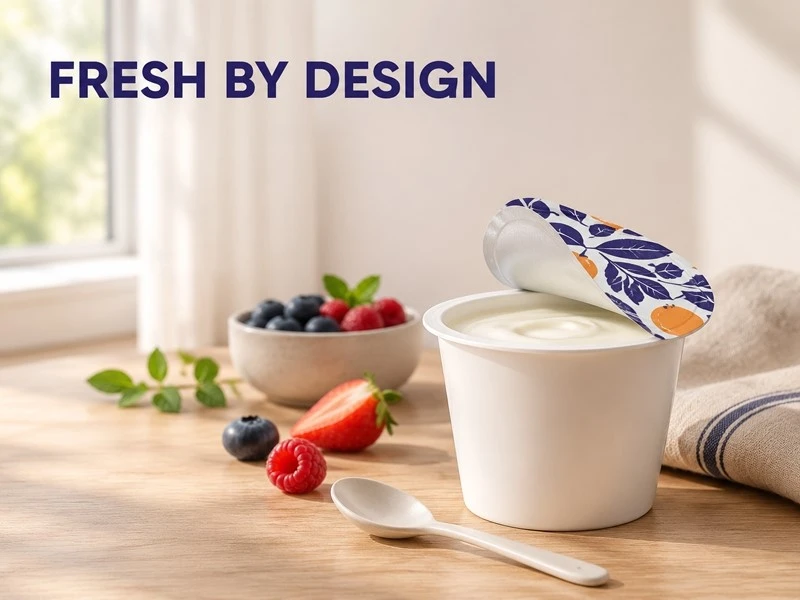
Start with a small trial matrix around your normal machine settings. Record temperature, dwell time, pressure, and the tray and film batch used. Include samples from different positions on a multi-cavity tool. Compare the force needed to start the peel, how steadily it continues, and how the film comes away at the end. Record whether the lid tears, stretches, leaves visible residue, or lifts part of the tray surface.
For a chilled meal, repeat the opening check on samples taken from refrigerated storage. If the product will be opened cold, that is the condition that matters to the customer. Use representative filled packs to evaluate the seal after handling, including cases where sauce or dressing could reach the flange during filling.
Do you need high barrier, anti-fog, or custom printing?
Each feature should solve a specific problem. High-barrier lidding film may be appropriate where oxygen or moisture transmission limits product quality. Ask for the relevant transmission data and its test conditions, then consider the lid and tray together. Shelf-life validation applies to the complete food and packaging system.
Anti-fog lidding film is worth evaluating when condensation obscures the product in the chilled display. Check clarity with actual food, at realistic temperatures and over the expected display period. For custom printed lidding film, give the converter the tray layout, print repeat, opening-tab position, and coding area. A sample with the proposed graphics lets you check whether key information stays visible after sealing and trimming.
For export projects, buyers may also ask whether the lid can support a packaging redesign under the EU Packaging and Packaging Waste Regulation. Review any material or recyclability claims using the complete pack and intended market. That discussion is easiest when the buyer shares the tray specification at the start.

What should you send a custom lidding film manufacturer?
Send the tray drawing or a physical tray, the food application, pack size, line make and model, and your current sealing settings. Add any oxygen or moisture barrier target, chilled or frozen storage requirements, artwork, and expected order volume. If you are replacing a film, include a retained sample and a short description of the issue. "The film tears at the pull tab after 24 hours in chilled storage" is far more useful than "the lid is too strong."
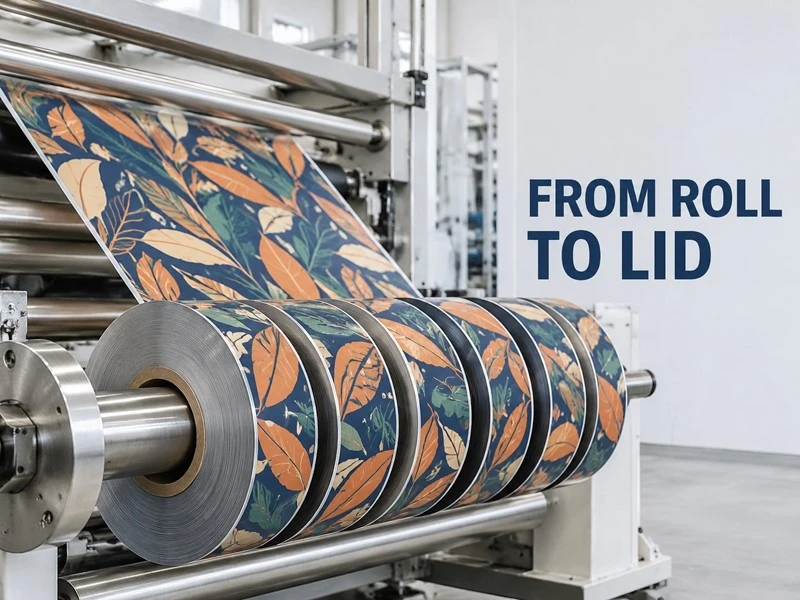
HongBang Packaging is a China-based custom flexible packaging manufacturer offering printed rollstock and application-specific film development. For an easy-peel lidding project, send your tray sample and sealing conditions so our team can review the proposed structure and sampling requirements before a production quote.
Request a lidding film consultation through HongBang Packaging or explore our custom packaging roll film capabilities.