

If you’ve ever stood in the grocery store aisle staring at rows of Ziplock stand up pouches, wondering if they’re actually safe for storing your homemade jams, roasted nuts, or freshly ground coffee, you’re not alone. As a supplier of these pouches, I get this question at least a dozen times a week—from home bakers stocking their pantry to small café owners looking for consistent, FDA-compliant packaging for their signature snacks. The FDA food approval process is often confusing, with strict rules that vary by packaging type, material, and even intended use, so today I’m breaking down what you need to know, cutting through the jargon to give you clear, science-backed answers.
First, let’s start with the basics: what “FDA-approved” actually means. The U.S. Food and Drug Administration doesn’t approve every single food packaging product individually. Instead, it regulates the substances that come into contact with food under the Food Contact Substances (FCS) program, which is outlined in Title 21 of the Code of Federal Regulations (CFR) Parts 170 through 189. A packaging material is deemed safe if its components are on the FDA’s FCS list, or if they comply with “generally recognized as safe” (GRAS) standards. For Ziplock stand up pouches, the key components are the plastic films that form the pouch body, the zipper seals that keep contents fresh, and any coatings or inks used for branding—all of which have to meet these strict guidelines.
Let’s get specific about the materials in our Ziplock stand up pouches. Most of our pouches are made from polyethylene (PE), a common plastic that’s been used in food packaging for decades. If you’ve ever looked at the numbering on the bottom of a plastic container, PE is the #2 (high-density, or HDPE) or #4 (low-density, or LDPE) plastic, both of which are widely recognized by the FDA as safe for food contact. For our more durable pouches, we also use Mylar, a polyester film that adds extra barrier protection against light and moisture. When it comes to Mylar stand up pouches, I’ve worked closely with our manufacturing team to ensure every batch adheres to 21 CFR 177.1520, the section that regulates olefin polymers (like PE) and 21 CFR 177.1630 for polyesters, both of which list these materials as approved for direct food contact.
One question I hear often is about the ziplock feature itself. The plastic used for the zipper seals in our stand up pouches isn’t some special, untested material—it’s made from the same FDA-approved polyethylene as the rest of the pouch body. The design of the zipper is engineered to create an airtight, leak-proof seal, which is critical for keeping food fresh, but the material itself is fully compliant. We never cut corners on this: every batch of zipper resin we source is tested to confirm it contains no harmful additives like phthalates or heavy metals that could leach into food, a requirement that falls under FDA’s migration limits, which cap how much of a packaging material can transfer to food under normal use.
Now, what about the different types of stand up pouches we offer and their FDA status? Let’s start with the most popular: digital printed stand up pouches. As a supplier, I know branding matters for small businesses, so our digital printing process uses water-based, non-toxic inks that are formulated to meet FDA guidelines for food contact. The inks are applied directly to the inner layer of the pouch (the side that touches food), so there’s no risk of ink transferring to contents—something we test for with every production run. For customers looking for a simpler, more cost-effective option, our stand up pouch without zipper is another FDA-compliant choice; these pouches are sealed on the top edge, so their only contact with food is the PE film, which is already on the FDA’s approved FCS list.
If you’re storing more sensitive foods—like cannabis products that need to be smell-proof, or specialty coffee that’s sensitive to moisture and oxygen—our smell proof stand up pouches are fully FDA-approved for food use. The barrier layers in these pouches (often a combination of PE and ethylene vinyl alcohol, or EVOH, which controls oxygen flow) are regulated under 21 CFR 177.1520 for PE and 21 CFR 177.1310 for EVOH, both of which are approved for food contact. Even our mono PE stand up pouches, which are made from a single layer of PE for recyclability, meet FDA standards because they don’t include any additional barrier layers that would require extra testing.
I want to be transparent here: there’s a common misconception that “stand up pouches” made from certain types of plastic aren’t safe, but that’s not true. The FDA’s approval depends on the specific material, not the packaging format itself. A flat plastic bag and a stand up pouch made from the same PE film will have the same FDA status, as long as the materials are compliant. That said, it’s important to note that FDA approval is for the packaging material, not for specific food pairs—so you don’t have to worry about storing acidic foods like tomatoes in our pouches, as long as the pouch meets migration limits for acidic conditions, which ours do. We test our pouches under three common food conditions: acidic (like citrus), fatty (like nuts), and aqueous (like water), and they all pass with flying colors.
Another point that comes up is what happens if a pouch is not FDA-approved. Any packaging material that’s not on the FCS list can’t be used for direct food contact in the U.S. That’s why we invest heavily in third-party testing for every batch of our pouches. Last year, we had a customer who switched to a cheaper, untested pouch for their granola and found that the plastic was leaching a small amount of a chemical that didn’t meet FDA limits; we were able to show them our test reports for our pouches, and they switched back, citing peace of mind as their top reason. Third-party testing is non-negotiable for us— every batch of Ziplock stand up pouches we ship comes with a certificate of compliance confirming that all materials meet FDA standards.
Now, let’s address a scenario many of our B2B customers ask about: exporting. If you’re based in the U.S. and selling food packaged in our pouches domestically, FDA approval is non-negotiable. If you’re exporting to other countries, the rules vary, but our pouches meet most global food safety standards too—like EU 10/2011 for plastic food contact materials, which is aligned with FDA guidelines. But for the purposes of domestic U.S. food storage, our Ziplock stand up pouches are fully compliant.
I also want to cover a common use case: home food storage. A lot of our individual customers use our pouches for freezing, canning, or storing leftovers. It’s important to note that while our pouches are safe for refrigerated or room-temperature storage, we don’t recommend using them for high-heat applications like boiling or microwaving, because the PE film can melt at high temperatures, which isn’t a safety issue per se, but it can damage the pouch. For low-heat home use, our pouches are perfect—many customers use them to store homemade soup, frozen berries, or dog treats, and they’ve never reported any issues.

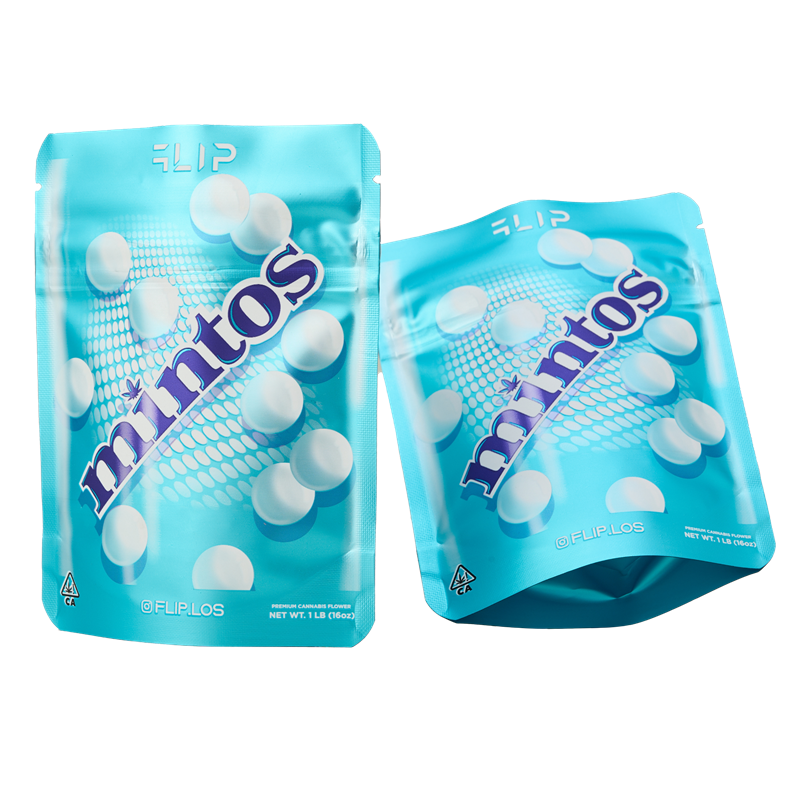
As a supplier, I’ve spent years learning the ins and outs of FDA food packaging rules, and I’ll be the first to admit that it can be overwhelming. That’s why we’ve made all our testing documentation and compliance reports available to customers upon request—no fine print, no hoops to jump through. Whether you’re a small bakery looking to package your cookies, a coffee roaster needing to keep beans fresh, or a home cook wanting to store bulk grains, our Ziplock stand up pouches are a safe, FDA-approved choice that works.
If you’re ready to place an order or have more questions about our stand up pouches, including our digital printed stand up pouches, stand up pouch without zipper, Mylar stand up pouch, smell proof stand up pouch, or mono PE stand up pouch, we’re here to help. Our team can walk you through our options, share compliance documents, and help you find the right pouch for your needs.
References
- U.S. Food and Drug Administration. (n.d.). Food Contact Substances (FCS) Program. Retrieved from https://www.fda.gov/food/food-contact-materials/food-contact-substances-fcs-program
- U.S. Food and Drug Administration. (n.d.). Title 21 CFR Parts 170–189: Food and Drugs. Retrieved from https://www.ecfr.gov/current/title-21/parts-170-189
- Plastics Industry Association. (2022). “Polyethylene in Food Packaging: Compliance and Safety.” Retrieved from https://www.plasticsindustry.org/food-packaging
- European Food Safety Authority. (2021). “Opinion on Polyethylene (PE) for Food Contact Materials.” Retrieved from https://www.efsa.europa.eu/en/efsajournal